0:01
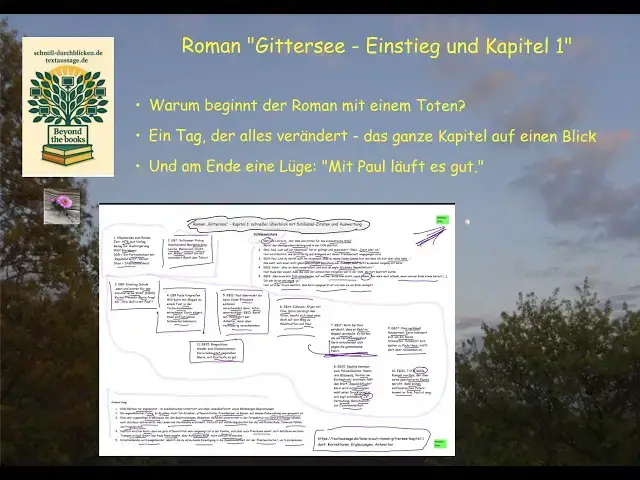
Yes, the novel Gittersee will soon be
0:03
on the curriculum, and we're starting
0:05
to introduce it here so that you can
0:07
get along well with it. Question number
0:10
one that we will clarify today: why
0:12
does the novel begin with a dead person
0:14
? Then it's about a day that changes
0:17
everything. The whole chapter at a
0:20
glance with us, and at the end, a lie
0:23
involving Paul; everything seems to be
0:25
going well, but it soon turns out that
0:28
it's not the case. It's all about
0:31
understanding the chapter quickly.
0:32
Including a diagram with key quotes and
0:35
two tips, as always with us. The longer
0:37
the video, the more important the
0:39
chapter markers are to jump somewhere
0:41
quickly. Also, for an introduction to
0:43
the novel. Anyone who wants information
0:45
first can fall back on the topic page,
0:47
which we will, of course, link. As is
0:50
often the case with us, everything is
0:52
nicely on one page, at a glance. Here
0:54
are a few general things about the
0:56
novel right away. Then here is the
0:59
overview of the novel's development.
1:03
Let's keep an eye on the content. Then,
1:06
of course, we also refer to key quotes
1:08
here, and at the end, there is an
1:10
evaluation. So let's start up here now
1:14
with that. General information about
1:16
the novel. According to the publisher,
1:20
it is set in the GDR in 1976. And it
1:24
has a connection to the expatriation of
1:27
Wolf Biermann. Yes, the date is not
1:29
mentioned, but there is talk of an
1:31
expatriation, and that is most likely
1:33
it. In any case, it is clear that the
1:36
GDR presents itself here as a one-party
1:38
state with a ban on leaving the
1:40
republic. This means you cannot leave
1:43
this country, or at most only to
1:45
socialist foreign countries, i.e., the
1:47
eastern neighboring countries or the
1:49
Soviet Union. And the Stasi, the State
1:52
Security, plays a major role, ensuring
1:55
that the rule of the party and this
1:58
system are not called into question or
2:01
endangered. Then we come to this murder
2:05
attempt. It is a very strange prologue.
2:10
It is apparently about this murder
2:11
attempt because there is a corpse lying
2:14
there, a motorcycle lies on top of it,
2:16
and a wire is stretched, and that is
2:18
that terrible story where people
2:19
stretch a wire between two trees. The
2:23
motorcyclist rides through, does not
2:26
see the wire, and is ultimately killed.
2:30
And then there is mention of a Rüle,
2:32
who plays a role later, and he takes
2:34
the wire with him. Aha. So he changes
2:37
something at the crime scene. These are
2:40
two things that have nothing to do with
2:42
this first chapter at all, because it
2:43
is not cleared up here yet. But we will
2:46
see that this murder attempt plays a
2:48
major role at the very end. Let's take
2:51
a look at the development now. The
2:54
whole thing starts at school, which is,
2:57
of course, under socialist auspices.
3:00
The teacher talks about sowing and
3:02
harvesting for the socialist good,
3:05
that's the premise, and beneath that,
3:07
the private dynamic unfolds between
3:10
Karin, the main character, and her
3:12
friend Marie, who asks at the end, how
3:14
are things going with Paul? A perfectly
3:17
normal question, knowing that he is
3:20
Karin's boyfriend. So much for the
3:22
introduction. Then, uh, it's important,
3:26
uh, with this novel, that you never
3:28
really know, uh, what the timeframe of
3:31
the whole thing is. You have to accept
3:34
that many things simply come from
3:36
memory. Therefore, you don't really
3:38
know at the moment if this already
3:39
happened or is yet to come. In any case
3:42
, this plays a decisive role in the
3:44
plot now, because Paul intervenes. He
3:47
wants to take Karin on a moped to a
3:50
festival in Czechoslovakia. It's not
3:52
entirely clear how things were back
3:54
then. You were probably allowed to go
3:56
there, but of course you couldn't
3:58
escape from Czechoslovakia to Austria,
4:01
for example, and thus leave the
4:03
socialist bloc. Karin hesitates; she
4:06
has to take care of her little sister,
4:08
above all else. It plays a big role in
4:11
the novel that she is still very tied
4:13
up at home. But then Paul just
4:17
persuades her to go to her father's
4:19
workplace and ask him for permission.
4:23
That is rather unlikely, but, uh, Karin
4:25
is willing to do it. Then, suddenly, of
4:29
course, not the father or anything, but
4:31
Paul disappears there, leaving her
4:33
alone. Even there, you can already see
4:35
something of what this relationship is
4:36
like. The father is then unavailable.
4:40
And, um, Karin turns around, walks home
4:43
, and gets a ride from a hitchhiker who
4:47
is portrayed in such a way that it
4:50
could be dangerous, but she manages to
4:53
get away in time. Then at home, it
4:57
becomes clear what the situation is
5:00
like. Namely, she has the usual trouble
5:03
with her grandma, who plays a fairly
5:04
dominant role there. Karin calms her
5:07
father, who has since appeared, and
5:09
says, "Yes, everything is fine." The
5:11
father is worried that something might
5:13
not go well. But she sets off anyway to
5:18
meet Paul, as they had agreed. They
5:22
seem to meet in the woods there, always
5:24
at a certain spot. And, um, now, um,
5:27
the following happens. Um, she sneaks
5:31
up a bit and Paul doesn't notice in
5:34
time, and she catches him hiding money
5:38
in his moped. And there you already
5:41
notice he wants to do something secret.
5:43
He also needs money. Uh, so there is
5:46
something going on that he doesn't
5:47
enlighten Karin, his girlfriend, about.
5:51
He asks her for discretion, and Karin,
5:54
well, it’s a bit eerie and too
5:56
problematic for her, so she decides
5:59
against the trip together. Now comes
6:04
the big break in the first chapter. Uh,
6:08
that means here suddenly now, right? No
6:11
, we already have that. That is
6:12
obviously wrong now. So let's just go
6:15
back, the break is actually here,
6:17
because she is home then, goes to sleep
6:19
, and at night two police officers
6:21
arrive, a Mr. Ham and a Mr. Wickwalst.
6:24
Ham is likely the slightly
6:26
higher-ranking one from the State
6:28
Security, and Wigwald is his companion.
6:31
Interrogation at the kitchen table, and
6:33
then the father’s question comes up:
6:34
what is even going on here, right? The
6:37
dangerous word "Republikflucht"(fleeing
6:40
the republic), and everyone in the GDR
6:42
knew that was a maximum crime that was
6:44
severely punished. Karin is then taken
6:47
away at first and put under pressure.
6:50
The details aren't described, but in
6:52
the end, it becomes clear that she says
6:55
yes, and one can only assume she
6:57
thereby declared her willingness to
6:59
work with the Stasi. That was something
7:02
the GDR placed great value on, getting
7:05
people to spy on their neighbors or to
7:08
see what could be reported to the Stasi
7:11
and so on. Then she is back home, and
7:14
Grandma imposes house arrest. As I said
7:17
, she is in command there. The father
7:19
seems a bit weak and reserved, is
7:21
mainly busy with car repairs, and the
7:24
mother doesn't want to care for the
7:26
child at all. Karin has to do that, so
7:30
she sneaks to Paul's house but meets no
7:34
one there. Instead, she meets this
7:39
Rüle, who was mentioned in the
7:41
prologue, who removed the wire from the
7:44
crime scene and thus takes on a very
7:46
problematic role. He is a buddy of
7:49
Paul's, and he now reports—you can
7:52
see that the timeframes here are not
7:54
specified at all—about his failed
7:57
escape, likely from Czechoslovakia,
7:59
perhaps toward Austria. And, um, Paul
8:02
has disappeared and he is set free.
8:06
Because his father plays a larger role
8:08
in the party or something like that,
8:09
and that's just how it is in such
8:11
systems. Whoever is higher up naturally
8:14
has the ability to do something for
8:17
their relatives and friends. And now we
8:21
come to the last aspect here, the
8:24
narrative building block. That is,
8:27
namely, the closing of the circle. Uh,
8:30
at the beginning, there was the
8:32
question from Marie, and how is it
8:34
going with Paul? And so on is not
8:37
answered, but here she says with Paul:
8:39
"I hope it goes well," though you have
8:40
no idea at what point in time she says
8:42
that. But in the context of the novel,
8:45
it looks as if she has already
8:47
experienced it all, right? and now
8:49
suddenly it is presented in that way.
8:52
But that is a major quirk of this novel
8:54
, that not everything is always made
8:56
clear there. When is someone speaking?
8:58
Are these thoughts, are they dreams,
9:01
and so on? Yes, let's move on to the
9:04
evaluation now. We have put this
9:06
together here. What becomes clear at
9:10
the end of the first chapter is the GDR
9:13
framework within socialist education,
9:15
as well as with the term "Republic" and
9:17
the limits on the amount of money; you
9:19
were apparently only allowed to take
9:21
100 Marks with you, and Paul has much
9:24
more money with him. Then the unusual
9:26
prologue, we have already talked about
9:28
that, where the narrative perspective
9:30
is also changed, right? The whole novel
9:33
is told from the first-person
9:35
perspective, and now suddenly there is
9:37
a narrator, a quite obvious anomaly in
9:39
the novel, whose involvement one is
9:42
curious about and who also plays a very
9:44
big role in the assessment of the novel
9:47
in the end. Then, as already hinted at
9:51
overall, a very idiosyncratic narrative
9:53
style where descriptions, thoughts,
9:55
feelings, and so on appear abruptly
9:57
from Karin's perspective, also shifted
9:59
in time, as we just said, and that
10:01
naturally makes reading and
10:03
understanding it difficult, and we are
10:05
trying to help with that here. Then
10:08
also the omission of quotation marks
10:10
for direct speech, and the partial
10:12
absence of question marks. So you have
10:15
real difficulty understanding it. It
10:18
becomes clear with Karin, the main
10:20
character, that she is quite obviously
10:22
very restricted in her family, but also
10:24
creates freedom for herself, even
10:26
accepting dangers like, for example,
10:28
while hitchhiking. And regarding Paul's
10:32
plans, she shows real autonomy, not
10:34
simply going along with it at the
10:37
decisive moment, saying "no"—so she
10:40
is quite a strong character. Decisive
10:44
events are omitted, above all the
10:46
presumed consent. to cooperate with the
10:50
State Security, in order to possibly
10:53
get free and to be left alone to some
10:57
extent. And that naturally fits quite
11:00
well with this perspective, that Karin
11:02
has no desire at that point in time to
11:04
talk about the details there, what that
11:06
means, or what thoughts she had. In any
11:10
case, with this novel, you don't even
11:11
know in what situation she is actually
11:13
telling all of this. That is a big
11:15
problem with the first-person
11:17
perspective, when it is not clear at
11:19
all who one is actually telling
11:21
something to. For what purpose? Now
11:24
let's move on to the key quotes we have
11:27
selected. It's always quite good not
11:29
only to know what a chapter was about,
11:32
but also to have it here in our ebook.
11:35
That should likely be the standard page
11:37
, otherwise just write it in the
11:39
comments and we will clarify where the
11:40
quotes can be found in other editions.
11:44
We have already pointed it out, the
11:46
teacher, we sow and harvest for the
11:48
socialist good, the ideological
11:50
background. Then Paul asks if she is up
11:53
for an adventure, he asked with a wink.
11:57
He also says now or never. Here you can
12:00
see how reckless and pushy he is with
12:02
his girlfriend. That is also certainly
12:06
an exciting topic that one could
12:08
discuss. What does it mean for a
12:12
friendship when one person has the
12:13
upper hand, wants to control everything
12:16
, and is not really open in this very
12:18
dangerous situation if he really wants
12:20
to commit "republic flight." And then
12:23
here too, you must never forget that
12:25
you are my little comma, that's what
12:27
she's always called, and that I love
12:29
you above all else. That is our
12:31
impression, there is not much of that
12:33
to be seen. And you can also see this
12:36
condescending attitude here, this "my
12:38
little comma," that is not necessarily
12:41
nice when one is striving for an equal
12:43
relationship. Then the father, this uh
12:48
passage that we already mentioned. What
12:50
exactly happened? And he says there,
12:52
Wickwalz, the second Stasi officer,
12:54
mentions fleeing the republic, and then
12:55
you know what's up; we had already
12:57
pointed out it was one of the most
12:59
serious offenses that was severely
13:00
punished. Then you notice that Hamm,
13:04
the senior Stasi officer, very clearly
13:07
says that you have to decide early on
13:10
which side you are on. That is just
13:12
part of such systems. There is only one
13:15
basic direction and you have to follow
13:17
it, or at least you must not stand out
13:20
in a negative way. It would be a shame
13:23
to regret something in the end,
13:25
wouldn't it? Something between a
13:27
warning and a threat. And Karin then, I
13:31
looked at him and said yes. And here
13:34
the pressure becomes clear to which
13:36
Karin is exposed and to which she
13:38
ultimately gives in. We hope that we
13:42
were able to make clear enough here how
13:45
that uh is playing out there. We will
13:49
of course go into more detail here on
13:51
this page. We always have a button here
13:54
, which we naturally also place up here
13:57
as a button to click on directly. And
14:00
we would be happy if this helped you to
14:02
get into the novel. Otherwise, another
14:04
reminder about the topic page, where we
14:06
also say many other fundamental things
14:08
about the novel. In any case, we hope
14:10
that it has been understood, we wish
14:12
you continued success with your studies
14:14
, and we will of course be continuing